
Legacy Coop Link
Summer 2026

Dear Legacy Cooperative Owners and Members,
I was hired as your Cooperative’s Interim CEO in February of this year. I have spent my entire 42 year career in the cooperative system, including 20 years living in Scottsbluff. During seven of those years, I managed the operations that made up Farmers Coop Elevator, based in Hemingford. Those experiences gave me a strong understanding of the agricultural dynamics and communities across this part of Nebraska.
Since joining Legacy Coop, my focus has been on addressing some of the challenges the Cooperative has been facing while positioning us for a stronger and more sustainable future.
We want to communicate openly and directly with you regarding several difficult decisions that Legacy Cooperative has recently made.
Agriculture across our region continues to face significant challenges. Persistent drought conditions have reduced production levels and created substantial pressure throughout the agricultural economy. Unfortunately, these drought conditions are expected to have multi-year impacts on both our producer customers and the financial performance of our cooperative.
At the same time, several Legacy Cooperative locations have experienced sustained financial underperformance. Despite extensive efforts to improve efficiencies, reduce costs, and strengthen operations, these locations are no longer financially sustainable in the current environment.
As a result, we have made the difficult decision to close or consolidate certain operations and eliminate some positions within the company.
These decisions are not made lightly. We recognize the impact these changes have on employees, customers, communities, and member-owners. Many of the individuals affected have dedicated years of service to Legacy Cooperative, and we are deeply appreciative of their commitment and contributions.
However, as a cooperative, we have a responsibility to make decisions that protect the long-term health and stability of the entire organization. Continuing to operate locations that are not financially viable in today’s environment would weaken our ability to serve our membership in the future.
The actions being taken are intended to position Legacy Cooperative to remain financially sound, operationally strong, and capable of continuing to invest in the services, facilities, and people necessary to support agriculture across our trade territory.
While these are difficult times, we remain confident in the resilience of our cooperative and the strength of the producers and communities we serve. Agriculture has always faced cycles of adversity, and we believe that making disciplined and responsible decisions today will help ensure Legacy Cooperative remains strong for future generations.
We sincerely appreciate your continued support, trust, and business during this challenging cycle for agriculture in our region.
If you have questions regarding your Cooperative, please feel free to contact me directly on my cell phone at 308-631-5876.
Sincerely,
E. Tod Clark
2026 Pathfinder Irrigation District Water Supply
Greg Needs, Watermaster
May 11, 2026
When we say there’s going to be short water season, it’s not a joke.
The valley’s demand for water to irrigate crops has been used since the early 1900’s. The Pathfinder Interstate canal irrigates approximately 100,000 acres in Wyoming and Western Nebraska. The way water gets distributed to the farmers is through a series of laterals, canals, five storage dams, and four diversion dams.
In 2026 the snowpack is just not there. There are three areas where the snowpack and runoff are watched and monitored; Upper Platte, Sweetwater, and the Lower Platte rivers.
The percentage of snowpack based on a 30-year average is below:
|
Based on a 30-year avg. |
5/11/2026 |
5/11/2025 |
5/11/2024 |
|---|---|---|---|
|
Upper Platte River |
37% |
66% |
112% |
|
Sweetwater River |
19% |
84% |
139% |
|
Lower Platte River |
2% |
46% |
160% |
As you can see above, there is just no snowpack in 2026. Thus, there is no water in the reservoirs. The best we, as an irrigation district, can do is to keep the ditches as clean as possible, which is difficult task, especially with no burn bans. In my division, we not only must burn the weeds out of the ditches, we also must spray the new weeds growing in the ditches, which is nearly impossible with the 300 miles of ditches and the weather limitations. Our water allocation is 0.60 inches per acre at .90 cubic feet per second (cfs) per 80 acres which comes to 26.6 days of water on 80 acres of land.
It’s a tough year, so we all need to work together and pray that we get more moisture this summer and winter.
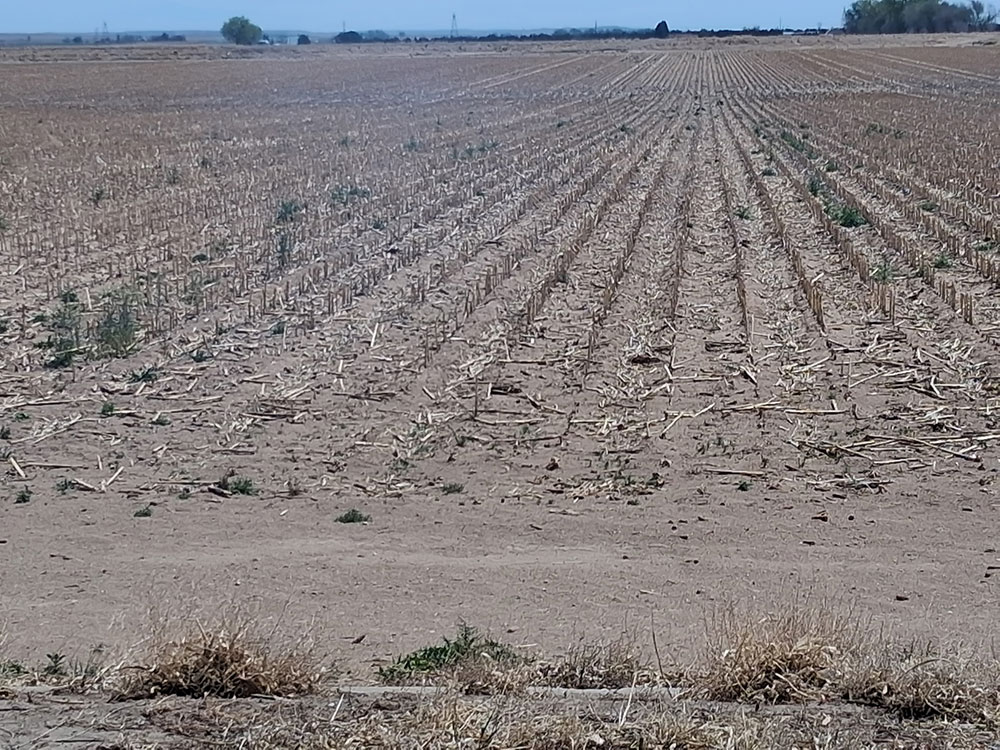
Furrow_Irrigtn_or_Surface_Irrigtn-NoWell-WaterFromIrrigtnDistrict
Furrow irrigation- no well
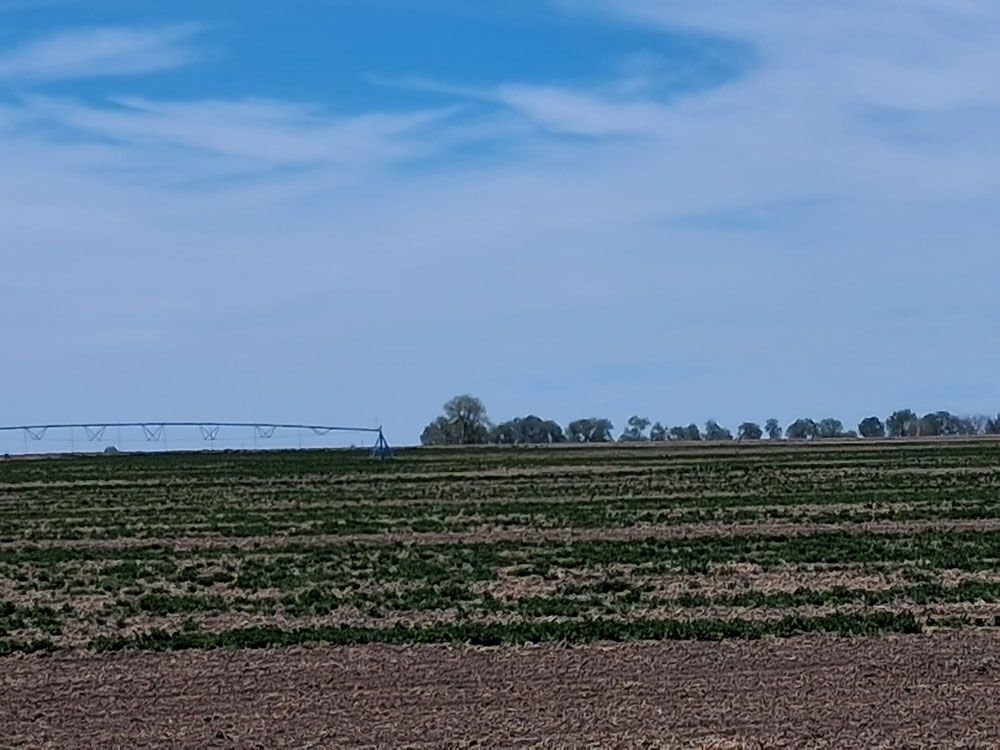
Hay_Field_Needing_Canal_Irrigations
Hay Field needing canal irrigation
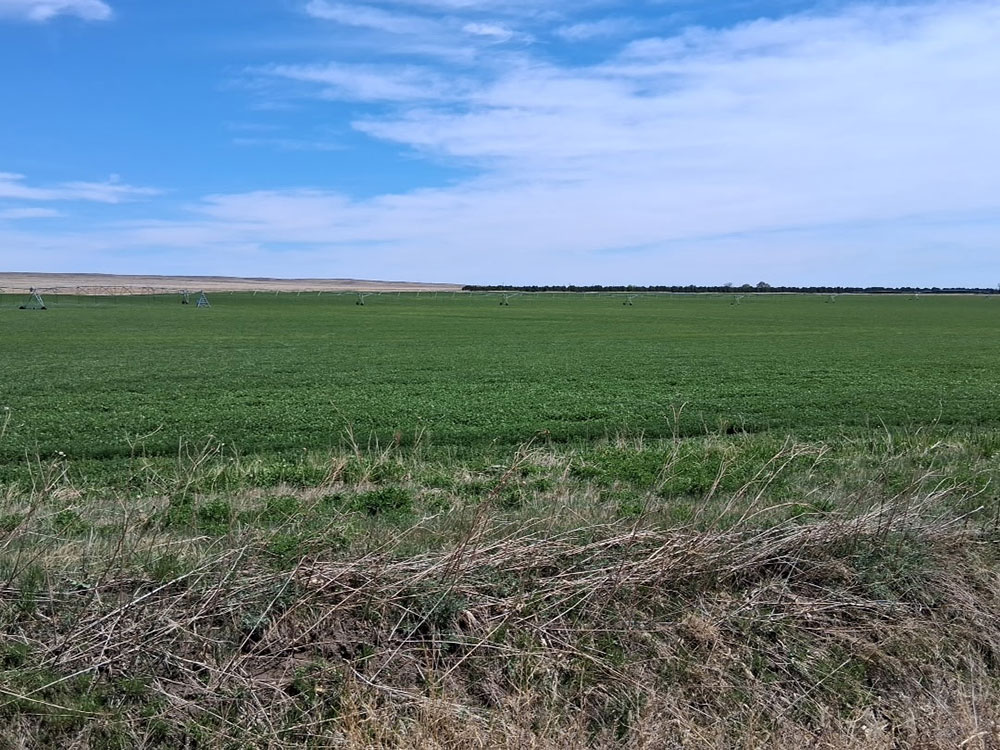
Hay_Field-Irrigated_by_Well
Hay Field irrigated by a well
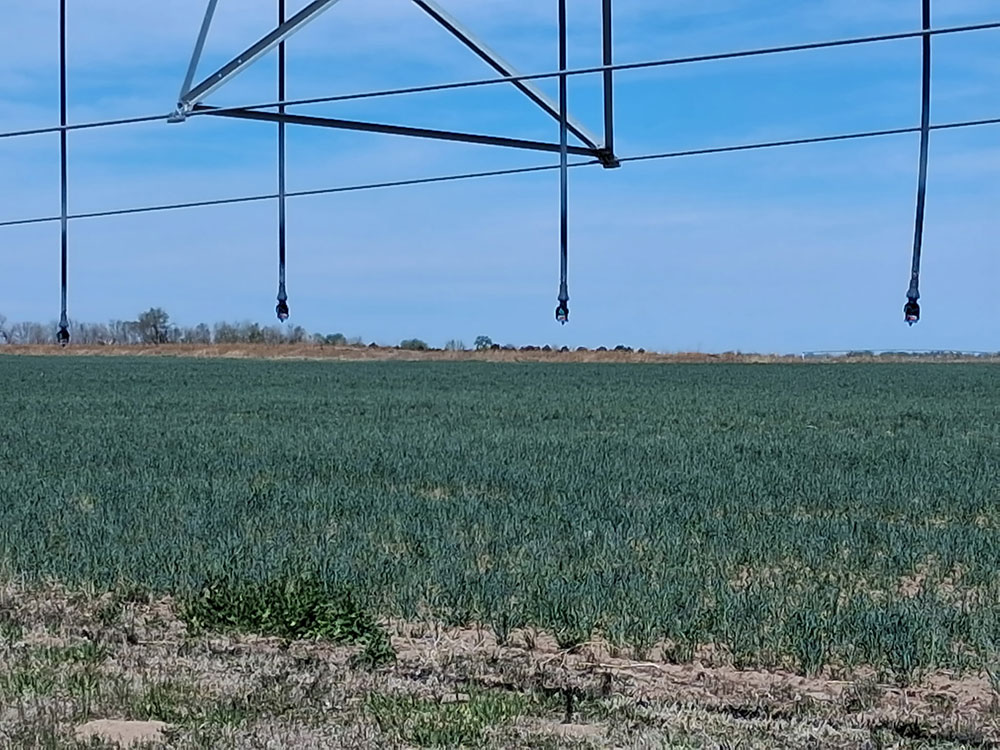
Pivot_strictly_on_Irrigation_Water-NoWell_NoCorn
Pivot strictly on irrigation water – no well
Drought Support Programs and Preventative Planting Situations
Cassandra Lohr,
Insurance Office from the Farm Credit Services of America

Persistent dry conditions and limited surface water supplies are currently a major concern for many producers this season. Reduced irrigation allocations, declining reservoir levels, and inadequate rainfall have made for difficult decisions going into the spring planting season. That’s where risk management tools such as crop insurance and USDA programs come in, helping provide some financial reprieve when conditions don’t go as planned.
Prevented planting can apply in dry conditions when there isn’t enough moisture or surface water available to establish a crop. Instead of covering lost yield or full revenue, it pays a percentage of the crop’s insurance guarantee, helping maintain cash flow when planting isn’t a realistic option.
Key things to keep in mind:
- Deadlines matter – you must meet final planting dates and report a notice of loss timely, within 72 hours of the final plant date
- Eligible acres only – the ground must be suitable and have a recent planting history in the last 4 years
- Cover crops are an option – producers may plant a cover crop on prevented planting ground as long as it is not taken to harvest for grain
This crop year is a critical time to take a look at your insurance coverages and discuss prevented planting to ensure you make the best decision for your operation.
Other risk management options to consider for 2027 are annual forage and pasture, rangeland, forage (PRF) insurance. Both products provide coverage based on a rainfall index during selected intervals. Annual forage is primarily for operations that plant forage crops for haying and grazing, while PRF is suited for livestock producers that rely on perennial pasture, rangeland and forage for grazing or haying. The 2027 insurance deadlines are July 15th for annual forage and December 1st for PRF.
Additionally, several USDA drought and disaster assistance programs may be available when moisture conditions significantly impact production, such as the Livestock Forage Program (LFP) and Emergency Assistance for Livestock, Honey Bees, and Farm-Raised Fish (ELAP). Reach out to your local FSA office to receive additional enrollment information. Also be sure to report all spring acres, prevented and planted, to your FSA office by July 15th.
As drought conditions continue to shape the growing season, we encourage producers to stay proactive by monitoring conditions closely, consider alternative forage options, and leverage available insurance and USDA support programs. Careful planning now can help reduce financial stress and position operations for recovery for when conditions improve.
Grain Industry
Bart Moseman
Grain Division Manager
“It’s as dry as it has ever been” is what I commonly hear from many of our patrons across our trade territory. This drought is going to have a large impact on the 2026 hard red winter crop and it is also causing many farmers to make difficult decisions about crops that have, or haven’t, been planted so far this spring.
Below is the current US Drought Monitor that was published May 14, 2026. As you can see, there are many large areas of the US that are experiencing really dry conditions.
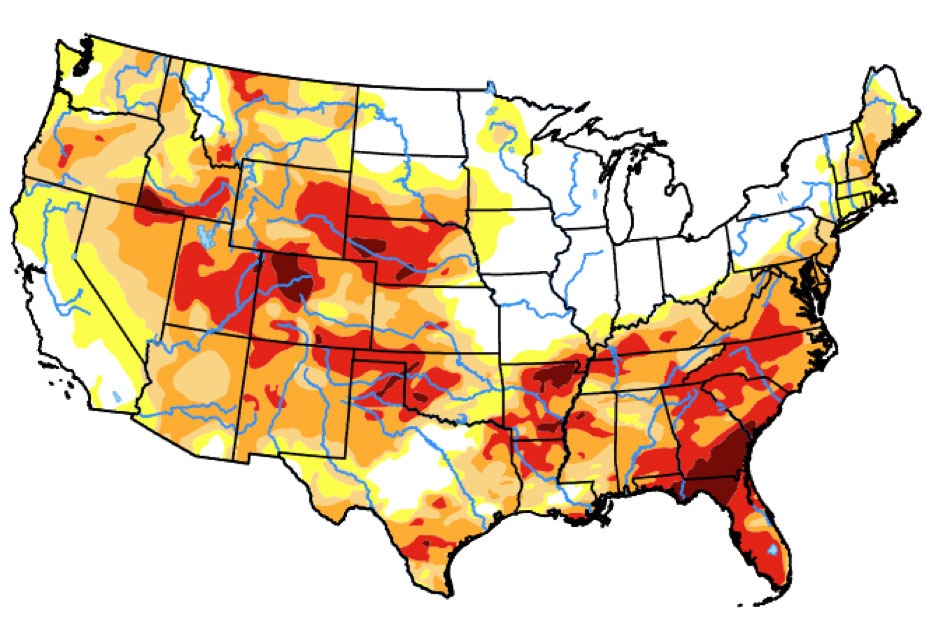
As stated earlier, hard red winter wheat is really hurting in our area. Between the freezing conditions in early May and the continued drought conditions, we predict no dryland wheat harvested for grain in 2026. We also have many concerns about test weight and yield with the irrigated wheat crop, also affected by the low temperatures, but we are still hoping to see a crop. Many of the irrigated pivots have been running since February!
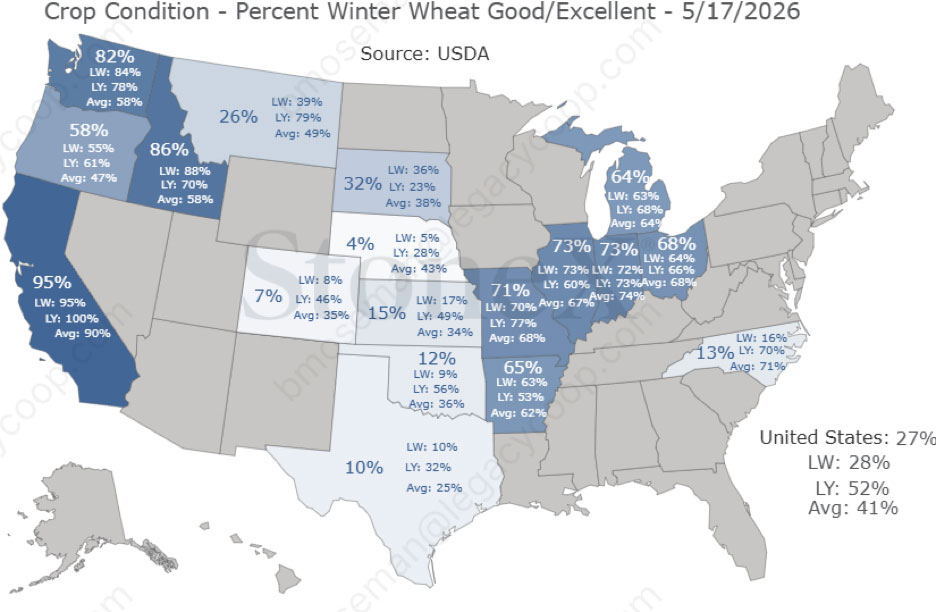
Below is the “Good to Excellent” ratings map for winter wheat as of 5/17/2026. Nebraska is only at 4% while our five-year average is 43%. Kansas, Oklahoma, Texas, Colorado, and Montana are all down significantly from their averages as well.
to Excellent” ratings map for winter wheat as of 5/17/2026. Nebraska is only at 4% while our five-year average is 43%. Kansas, Oklahoma, Texas, Colorado, and Montana are all down significantly from their averages as well.
The wheat markets have been trending higher on the perceived conditions issues. The USDA did significantly reduce the US wheat production on the last “Supply and Demand” report that came out on May 12th.
Here is a daily chart of the Kanas City July 2026 Winter Wheat (KEN26). We have been in an uptrend since February.
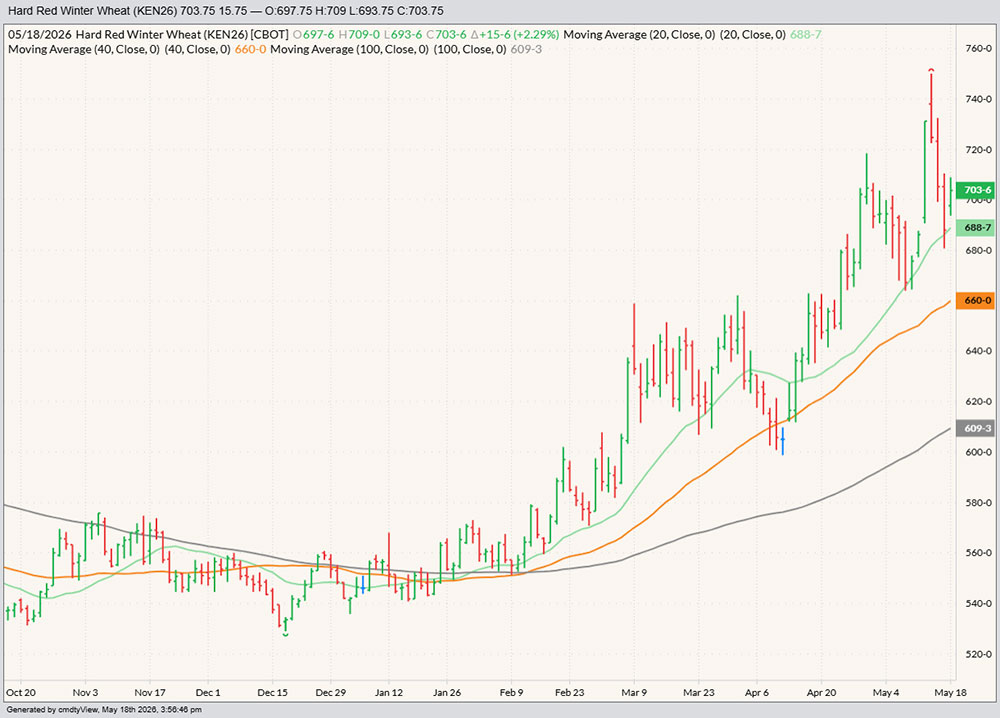
Normally this kind of action would cause a lot of selling activity but the producers are reluctant to participate because of the high likelihood of there not being a crop to sell.
Many farmers are making the decision to forgo planting dryland corn in 2026. With no subsoil moisture, the crop doesn’t have much of a chance. Some producers are waiting to see if it does rain, but many are thinking it would have to rain a lot to get the moisture we need to get the crop started.
All of this makes for challenges for the Legacy Cooperative’s grain business. Grain volume is usually the first thing needed to have a profitable year. We aren’t successful unless our patrons are successful first. All we can do is control what we can control and ask for blessings of rain. I encourage everyone to stay positive and look for opportunities that the future will hold.
Feed Industry
Seth Terrell
Feed Division Manager
When severe drought hits our area, it moves to the forefront in every producer’s mind. Every decision influence current and future goals for herds, pastures, and profitability. These choices can’t be taken lightly. Ultimately, we can only control what we can control and make decisions based on the information that we have on any given day. Add fire into that scenario, it leads to devastating results.
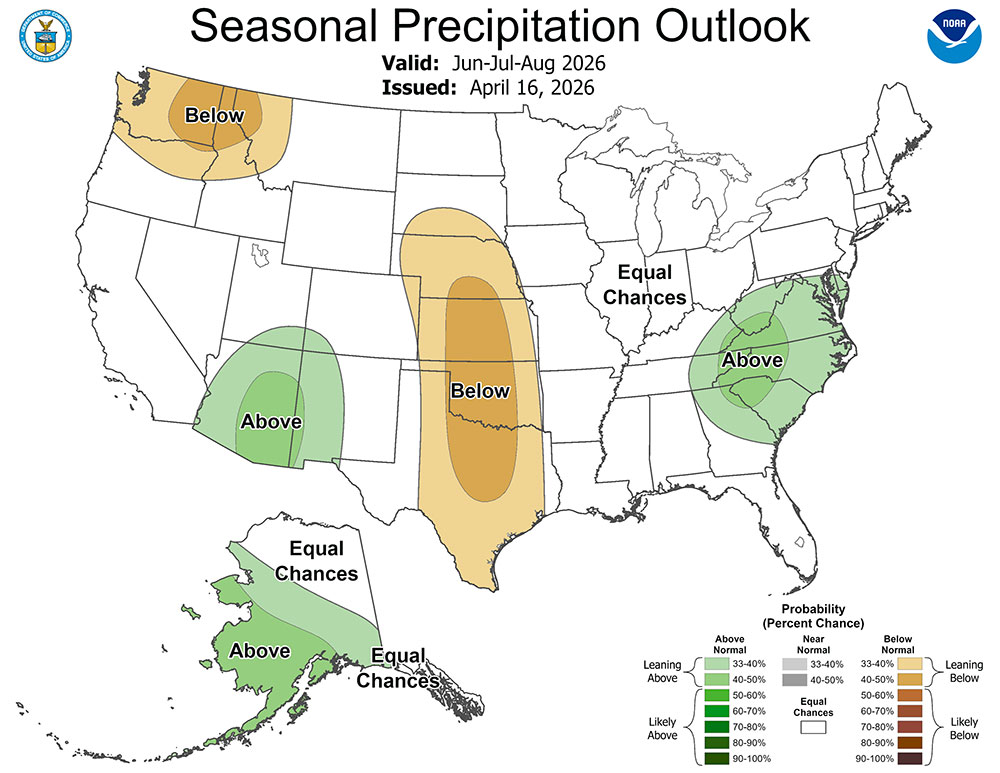
Areas within our territory have received some moisture in recent days, but significant amounts are needed to have hope of a salvageable growing season. Pastures are behind schedule and will most likely be well below average even if we see ample moisture moving forward. There is still time for hay production, specifically on acres that are moving away from grain production. Mentioning grain production, our trade area will likely see an anomaly this year, as it’s likely we will become a net importer of grain. It is still early, so things may change. Corn planting intentions are way below normal and the window to plant is basically over, and alternatives are limited.

Our Feed Division is prepared to assist our area producers with the challenges that this drought is presenting. Our feed mill in Gordon produces a large variety of blends that can be customized to fit an operation’s specific needs. Cracked corn and Dry Distiller Grains blends are our highest volume products produced, with options that fit feedlot and cow/calf scenarios. Our creep-feed product utilizes a Cargill limiter called Ranger, which controls intake in a cost-effective manner. The Ranger mixes are highly palatable, which encourages even young calves to consume the product. Creep feeding will help replace the nutrition lacking in pastures and economically add pounds to a calf crop.
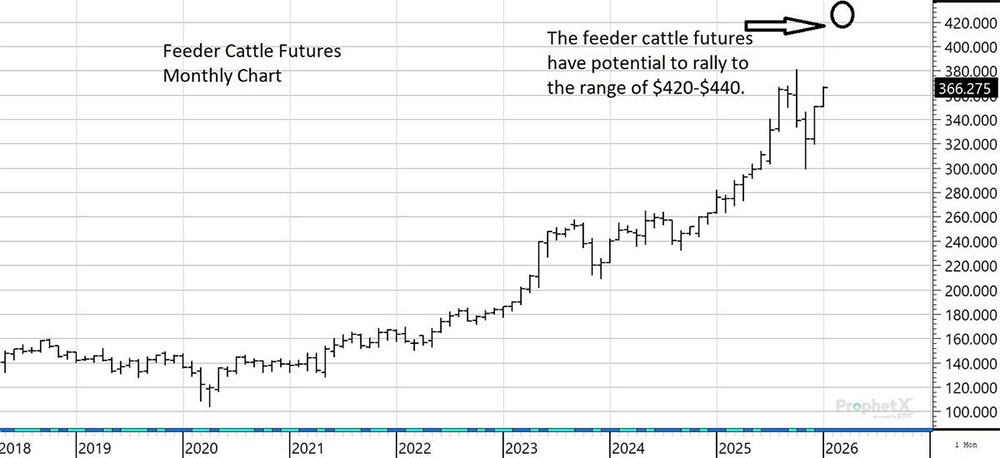
Cattle prices are at record high levels. Financial considerations are at the center of our decision making. Feed costs are relatively cheap as we head into the summer. The national corn market is predicted to stay at levels where incentive adding pounds to cattle before they are marketed.
We have a vast supply of options for every operation:
- Bulk Feed mixes delivered by our Legacy Coop Team
- Bagged feed produced in our mill under our Western Choice label.
- Lick Tubs for protein and mineral needs
- Molasses based Liquid Feed by QLF for pasture and feedlot operations
- A broad variety of minerals from Cargill and Midwest Livestock Services
- Wide variety of feed for 4-H and Show animals
Our team will be working with customers to help them manage through this drought by helping with feed samples, diet/ration formulation, and delivering the products and services to keep operations moving forward. We have a knowledgeable staff and a deep pool of resources to help with any operation. Challenges can separate the wheat from the chaff, so reach out to our team at Legacy Coop Feed for products and services to help you succeed.
Energy Industry
Brendon Howard
Energy Division Manager
It is that time of year again. Time to get the farming season kicked off, hopefully we see some moisture. And it is time to be thinking about summer fill propane and getting your contracts for the winter heating season. We have three incredible salespeople out in the field to serve you. Norah Harris, covering from Cheyenne through the I-80 corridor to Sidney. She can be reached at (307) 292-1871. Dustan Keener, covering from Wheatland, WY. Through the valley to Lewellen. He can be reached at (308) 629-8137. And Kloee Vanmeter, covering the Alliance, Hemingford, and points North and East of Alliance. She can be reached at (308) 220-8890.
Please reach out to them for any of your energy needs. Always remember Legacy Coop is here for you with energy products from fuel, propane, and lubricants. We strive every day to provide a top-quality product at a competitive price. We want to be your trusted source for energy products, as well as information. If you have questions, please feel free to reach out to our sales team, or to myself.
Thank you for your support of Legacy Coop. and we look forward to serving you for many years to come.

Agronomy Industry
Blaine Magnuson
Sales Agronomist
The current environment facing ag producers in the Nebraska Panhandle and Eastern Wyoming paints a bleak picture for producers in 2026. With grain commodity prices hovering near record lows, input prices climbing nearly 50% in just a few months, and the entire area being plagued by a long-term drought. This grows more complex as wildfires take away summer grazing lands that were already drought plagued and the surface water irrigation system that has serviced the producers of the area for over a century is set to deliver unprecedented shortfalls of irrigation water. This has led to a tremendous number of acres, well over 100,000, in the affected areas being opted into prevent-plant declarations as well as an extreme spike in regional forage prices. The areas in the north and south of the affected region do not remain untouched, as record drought, warm temperatures, and frost damage have negatively impacted the alfalfa and winter wheat crops. The reach and scope of this disaster really cannot be understated. The regional economy is heavily reliant upon a backbone of production agriculture and the waves that radiate outward will touch everyone and everything in some capacity.
During these times new ideas, communication and cooperation among businesses, ag producers, and industry are more important than ever. As we teeter on a precipice that could easily shape the next decade plus of our region’s economy, we need to remember that resilience, partnership, and creativity are what this land was built on. By thinking outside the box and working together this can and will be overcome.

EMPLOYEE SPOTLIGHT
Employee Spotlight: Celebrating the Legacy Award
At Legacy Coop, our employees are the foundation of everything we do. Each year, one employee who exemplifies our core values and demonstrates outstanding dedication to our customers, coworkers, and communities is honored with the prestigious Legacy Award.
Employees with a minimum of five years of service are eligible for nomination by their coworkers and managers. Finalists are then reviewed and selected by the Board of Directors, with the winner recognized during the Annual Membership Meeting each January. The Legacy Award recipient receives $2,500 in cash, 40 hours of additional vacation time, and a place on the Wall of Fame in the corporate office.
2025 Legacy Award Winner — Ruben Garcia
Legacy Coop is proud to recognize Ruben Garcia, Operations Manager for the Grain Division as the 2025 Legacy Award winner.
Ruben earned this honor through his unwavering dedication to Legacy Coop, the farmers we serve, and the end users who depend on our products every day. Known as a boots-on-the-ground leader, Ruben works alongside his team and believes the best leadership comes from leading by example. His hands-on approach, accountability, and willingness to step in wherever needed help ensure safe, efficient, and high-quality operations.
Ruben also reflects Legacy Coop’s values beyond the workplace. As a proud family man, he brings the same integrity, commitment, and example-setting leadership into his home life as he does on the job.
Ruben’s leadership embodies what it means to be Rooted in the Land, United in the Community, and Growing the Future.